

Data model
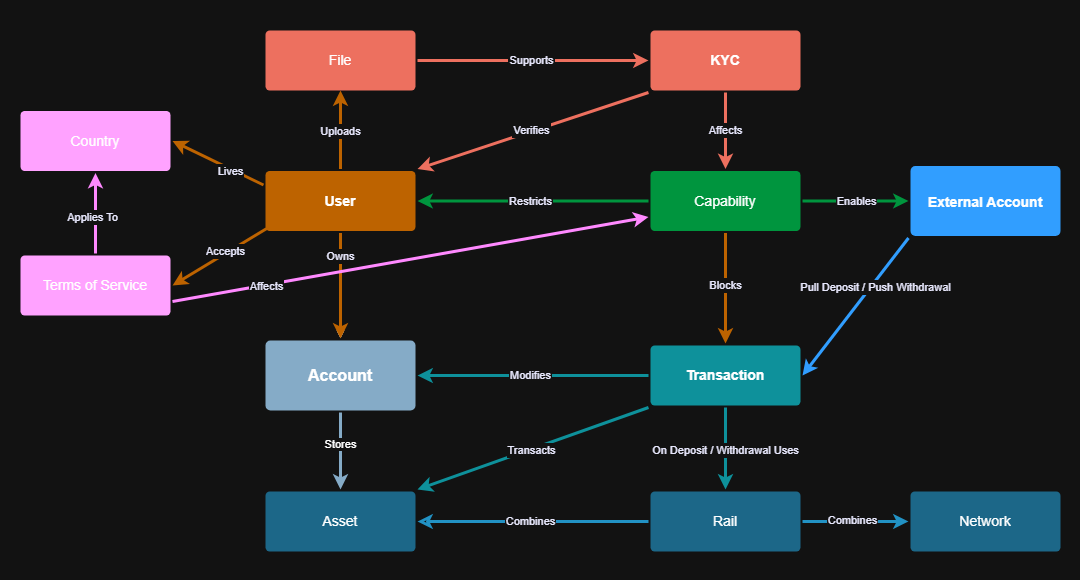
Key concepts
Denomination
Denomination currency refers to the currency unit in which the value of a transaction, trade, or financial asset is expressed. It provides a consistent way to measure value across different assets or currencies. Additionally, knowing the denomination helps in assessing exposure to foreign exchange fluctuations. The denomination currency is not necessarily the same as the currency used to pay. A user can buy an asset priced in EUR (denomination currency), but pay in USD. As another example, users might:- Hold balances in one currency (e.g., GBP)
- View prices in another (e.g., USD)
- Transact in yet another (e.g., BTC)
- Buying Crypto
- You buy 1 BTC priced at $60,000 USD.
- USD is the denomination currency (price reference).
- You pay in EUR → conversion happens at settlement.
- Cross-Border Payment
- A vendor invoice is denominated in GBP.
- You pay using USD.
- GBP remains the denomination currency (the expected value); USD is converted to match that amount.
- Portfolio Holdings
- A portfolio lists all assets valued in a single denomination currency, like USD, giving a unified view even if balances are held in multiple currencies.
- Statements
- A portfolio statement expresses all holdings in the requested denomination asset using period-end exchange rates.
- A transactions statement records the denomination asset and exchange rates at the time each transaction completed.